


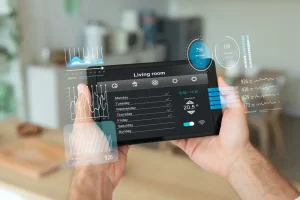
Smart home installation Dubai projects involve much more than connecting a few smart devices to Wi-Fi. A professionally designed system brings lighting, climate control, motorized curtains, security, entertainment and other technologies together so they can operate as one integrated home environment.
Whether you are planning automation for a new villa, renovating an existing property or upgrading an apartment, the installation approach should be based on the property layout, infrastructure and the systems you actually want to control.
At Abode Automation, we design and integrate smart home systems in Dubai and across the UAE for different residential requirements, from individual lighting and climate controls to complete home automation.
What Does Smart Home Installation in Dubai Include?
A professional smart home installation starts by identifying which systems need to communicate with each other.
Depending on the property, this can include:
- Lighting control and automated scenes
- Climate and AC control
- Motorized curtains, blinds and shades
- CCTV and security integration
- Intercom and access control
- Audio and entertainment systems
- Home cinema integration
- Sensors and occupancy detection
- Mobile app and touchscreen control
- Voice control
- Wi-Fi and network infrastructure
Instead of operating each system independently, home automation allows compatible technologies to be managed through centralized controls and programmed scenes.
Step 1: Property Assessment and Smart Home Planning
The first stage is understanding the property.
For an existing home, the installer needs to examine the electrical layout, available wiring, network infrastructure and the areas being automated.
For a new villa or property under construction, automation planning can begin much earlier. This makes it possible to coordinate cabling, lighting circuits, control panels, networking and other infrastructure with the electrical contractor, consultant and interior designer.
Planning early can also make future expansion easier.
Step 2: Choosing Wired, Wireless or Hybrid Automation
One of the most important decisions during smart home installation is how devices will communicate.
Wired automation is commonly considered for new construction and major renovations where dedicated automation cabling can be planned in advance.
Wireless automation can be useful when upgrading existing properties where extensive new cabling may not be practical.
Some homes use a hybrid approach, combining wired infrastructure with wireless technologies depending on the application.
The right approach depends on the property rather than simply choosing one technology for every installation.
You can also read our guide to wired vs wireless home automation in Dubai for a more detailed comparison.
Step 3: Lighting and Climate Control Installation
Lighting and climate control are among the most commonly integrated systems in residential automation.
Efficient control of cooling and lighting can also support lower household energy consumption. DEWA provides additional electricity-saving recommendations for Dubai homes.
Smart lighting can provide dimming, scheduling, occupancy-based control and customized scenes for activities such as entertaining, relaxing or watching a movie.
Climate automation can coordinate temperature controls and schedules based on how different rooms are used.
Systems from technologies such as Lutron, KNX and HDL can be incorporated depending on the design and project requirements.
Step 4: Motorized Curtains and Shades
Motorized curtains, blinds and shades can also become part of the automation system.
They can be controlled individually, grouped by room or included within automated scenes. For example, a scene can adjust lighting, curtains and climate settings together instead of requiring separate controls.
This is particularly useful in villas and residences with multiple windows or large glazed areas.
Step 5: Security, CCTV and Access Control Integration
A smart home can also integrate compatible security technologies.
Depending on the project, this may include CCTV cameras, video intercom, access control, sensors and other security systems.
Centralized integration makes it easier for homeowners to monitor and control different systems from compatible interfaces rather than managing several unrelated applications.
Step 6: Entertainment and Home Cinema Integration
Automation can extend beyond lighting and security.
Audio systems, televisions, home cinemas and other entertainment equipment can be incorporated into customized scenes.
For example, activating a cinema scene could adjust compatible lighting, curtains and entertainment equipment together.
For properties with dedicated entertainment spaces, the automation design can also be coordinated with the home cinema and acoustic system.
Step 7: Programming and System Integration
Installing the hardware is only part of the project.
The automation system must then be programmed so that devices and systems respond correctly to commands, schedules, sensors and customized scenes.
Controls can be configured around the homeowner’s daily routines rather than requiring the homeowner to adapt to the technology.
Step 8: Testing, Handover and User Training
Before completion, the system should be tested to confirm that the integrated functions operate as intended.
The homeowner should also understand how to use the main controls, mobile applications, scenes and schedules.
A professionally delivered smart home installation should leave the homeowner with a system that is straightforward to operate and can be supported or expanded when requirements change.
Smart Home Installation for Villas in Dubai
Villa automation often requires more extensive planning because multiple rooms, floors and outdoor areas may need to operate together.
Projects can include centralized lighting, climate control, motorized curtains, CCTV, intercom, Wi-Fi, multi-room audio, home cinema and other integrated systems.
For villas under construction or renovation, involving the automation integrator early can help coordinate the technology infrastructure with the wider project.
Smart Home Installation for Apartments
Apartment automation generally requires a different approach.
Existing wiring, building regulations and renovation limitations can influence which technologies are practical. Depending on the property, wireless or hybrid systems may provide greater flexibility.
We’ve covered these considerations separately in our guide to apartment automation in Dubai.
How Much Does Smart Home Installation Cost in Dubai?
There isn’t one standard price for every smart home installation.
Cost depends on factors such as property size, number of rooms, systems being integrated, wiring requirements, selected technologies and the complexity of programming.
For a more detailed breakdown of the factors that influence pricing, read our Smart Home Cost in Dubai: Budget vs Luxury Home Automation guide.
Choosing a Smart Home Installation Company in Dubai
When comparing smart home installers, look beyond individual devices.
A professional integrator should consider the complete system architecture, electrical infrastructure, networking, compatibility, programming and future expansion.
It is also useful to work with a company familiar with established automation technologies and capable of coordinating different systems within one project.
Smart Home Installation Across Dubai and the UAE
Abode Automation provides residential automation design and integration for villas, apartments and other properties in Dubai and across the UAE.
Our solutions can bring together lighting control, climate control, motorized curtains and shades, security, entertainment, networking and other compatible technologies according to the requirements of each property.
If you are planning a new home, renovation or automation upgrade, contact Abode Automation to discuss the installation requirements for your property.